
A scarf is one of the most popular first projects for beginner knitters. It is simple, useful and easy to personalise, making it a great way to discover the basics of knitting and enjoy your first handmade project. But when you are just getting started, one question often comes up: which stitch is best for knitting a scarf? Depending on your experience, the look you want and your personal style, some knitting stitches may suit your project better than others. In this guide, we explore several easy and creative stitches for knitting a scarf.
How to knit a scarf: the basics to know
Choosing the right stitch for your project is important, but understanding a few basic principles will also help you achieve the result you want. To knit a simple scarf, you will need:
-
A pair of knitting needles suited to your yarn. Check the recommendation on the yarn label and adjust according to your tension swatch.
-
Yarn in the colour and weight of your choice. A slightly thicker yarn can be particularly beginner-friendly because the stitches are easier to see and the project grows more quickly.
-
Optional extra yarn for finishing touches such as fringe or pom-poms.
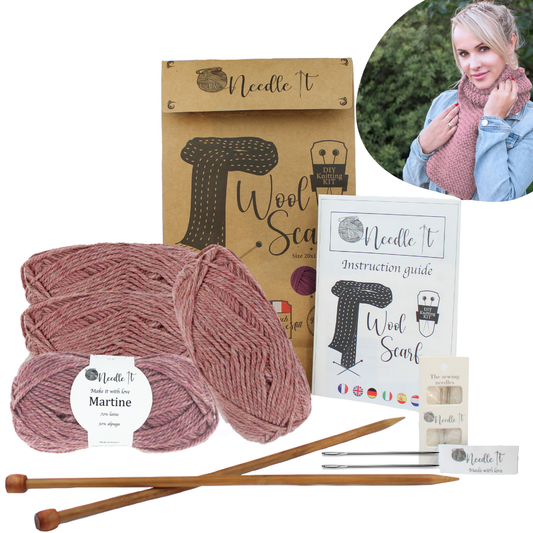
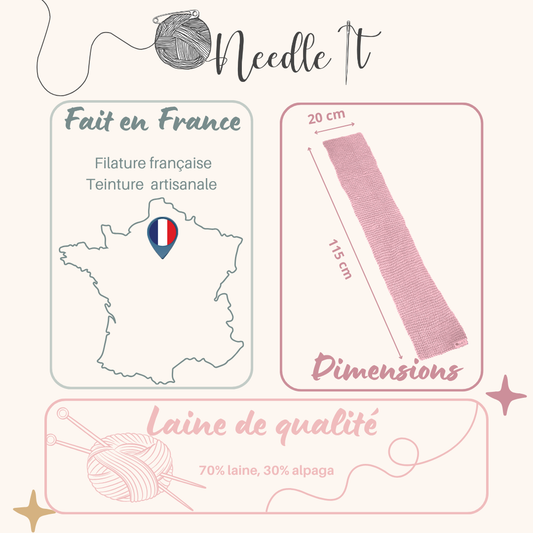
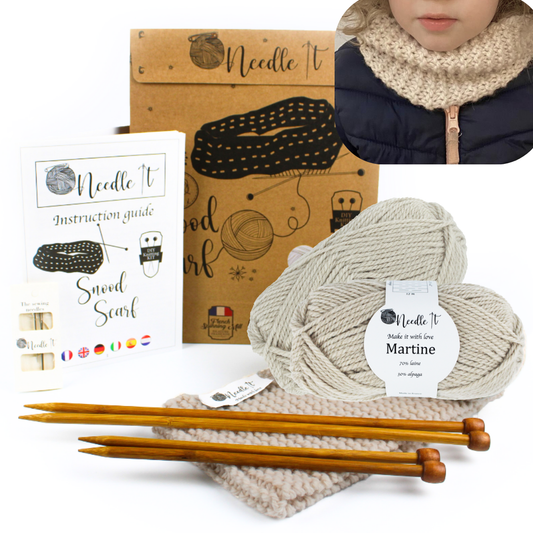
A classic adult scarf is often around 20 to 25 cm wide, although you can adapt this to suit your own style. For length, around 1.5 to 2 metres is a useful guideline. If you want to make getting started even easier, Needle-it offers a complete beginner-friendly project: the scarf knitting kit includes the materials and step-by-step guidance you need to start knitting with confidence.
Ready to knit your own scarf?
Garter stitch: ideal for an easy beginner scarf
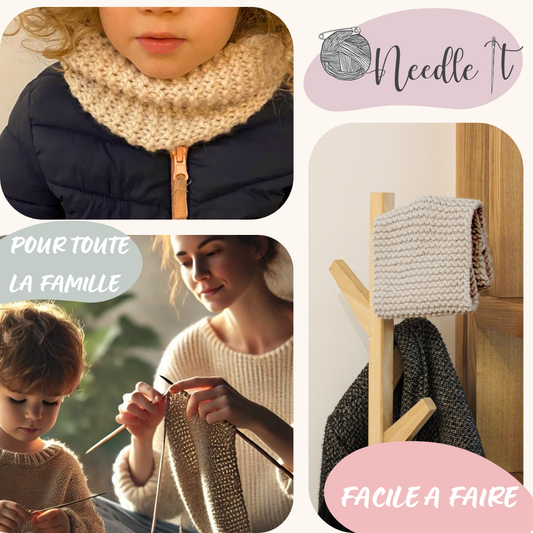
If you are new to knitting, garter stitch is one of the easiest choices. It simply involves knitting every stitch on every row. This makes it very easy to learn, even for your very first scarf. The finished fabric is soft and textured, and it generally lies flat without curling at the edges as much as stocking stitch. This makes garter stitch a lovely option for a child’s scarf or a first handmade gift idea. To learn more about this technique, take a look at our guide on how to knit garter stitch.
Rib stitch: flexible and timeless
If you want a scarf with more stretch and texture, rib stitch is an excellent choice. It is created by alternating knit and purl stitches, for example in a 2x2 rib or 1x1 rib. A ribbed scarf has a classic, elegant look, stretches easily and offers an attractive texture on both sides. You can also change the style simply by adjusting the width of the ribs. The result is a timeless scarf that works with many different looks.
Seed stitch: a textured classic
If you already know the basics, seed stitch is a lovely next step. It is worked by alternating knit and purl stitches, then offsetting them on the following row. This creates an even, lightly textured surface with a modern yet timeless appearance.
Seed stitch is a great option if you are looking for a scarf knitting stitch that feels a little more original while still being easy to learn. It is also a lovely choice for a handmade gift, as the texture looks attractive on both sides.
Stocking stitch: simple and smooth
Stocking stitch is often one of the first techniques learnt after garter stitch. It alternates one row of knit stitches with one row of purl stitches, creating a smooth front and a more textured reverse side.
However, as mentioned above, stocking stitch naturally tends to curl at the edges and ends. If you want to use it for a scarf, consider adding a garter stitch or ribbed border to help reduce curling.
Decorative stitches: personalise your scarf
Once you feel comfortable with the basics, you can experiment with more creative knitting patterns:
-
Wave stitch: ideal for a light, decorative scarf.
-
Cable stitch: perfect for an elegant scarf with plenty of texture and detail.
-
Loop stitch: playful and highly textured, it adds plenty of volume and character.
These patterns are a great way to create a unique accessory while learning new knitting techniques along the way.
Knitting a scarf: tips for a personal finish
If you want to create an especially soft or elegant scarf, you can:
-
Choose soft, comfortable yarns such as alpaca or mohair blends;
-
Try textured patterns such as seed stitch, wave stitch or delicate ribbing;
-
Add thoughtful finishing touches such as fine fringe, small pom-poms or a contrasting border.
A hand-knitted scarf is not only practical, but also a personal gift made with care and love.
The scarf knitting kit: everything you need to get started
If you are looking for an accessible and relaxing knitting project, the Needle-it scarf knitting kit is a practical all-in-one solution. It includes:
-
Yarn suited to the project;
-
Knitting needles in the right size;
-
Clear step-by-step instructions designed with beginners in mind.
This means you can start knitting without having to source every material separately. It also makes a thoughtful gift for anyone who wants to discover knitting or begin a creative handmade project of their own.