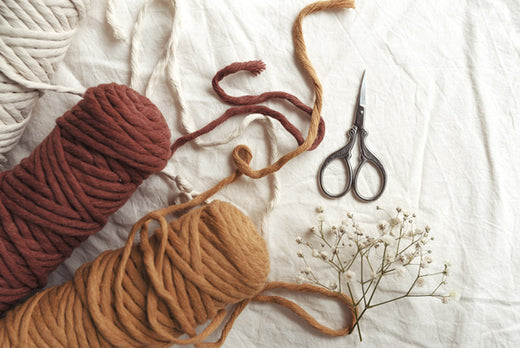
Knitting with two different strands of yarn at the same time is a simple technique that lets you combine colours, fibres and textures in one project. You can use it for hats, jumpers, blankets and plenty of other knitting projects. Holding two strands together can also create beautiful colour effects or give your knitting extra volume. To keep the yarns from tangling and achieve an even finish, a few simple techniques can make all the difference. Here is how and why to knit with two different strands of yarn, step by step.
Why knit with two strands of yarn?
Knitting with two strands held together is particularly useful when you want a thicker, fuller fabric. But the technique is also perfect for experimenting with colours, combining different fibres and creating interesting textures. Before getting started, here are the main reasons to try it.
Knit with two strands for a thicker fabric
Holding two or more strands together creates a thicker yarn. This can give jumpers, home accessories, blankets and other projects a fuller, chunkier feel.
Because two strands held together are generally thicker than a single strand, you will usually need larger knitting needles. The exact needle size depends on the yarns you use, the fabric you want to create and your own knitting tension. The most reliable approach is therefore always to knit a tension swatch first.
Combine two colours in the same knitting project
Knitting with two differently coloured strands is an easy way to create new colour effects. Both shades appear together in the stitches, producing a marled or blended look. It is a lovely way to personalise your knitting and experiment with colour combinations. White and pink, for example, can create a softer, delicately blended effect when knitted together.
So if you cannot find exactly the yarn colour you have in mind, holding two different shades together can be a creative alternative.
Combine different fibres and textures
Knitting with two different yarns also allows you to mix fibres and textures. This can add softness, shine or extra texture to your project. You could, for example, combine wool with a fine mohair yarn for a softer, fluffier finish. A thin lurex strand can be added for a subtle touch of sparkle. Just make sure the fibres have compatible care requirements and suit the result you want to achieve.
Create special effects with two strands
Holding two different yarns together is also an easy way to create interesting visual effects. Two contrasting colours can produce a marled finish, while combining different yarn textures can add depth and character to your knitting.
Use up leftover yarn
Knitting with two strands can also be a great way to make use of leftover yarn. A bright colour can, for example, be paired with a more neutral shade to create a completely new effect. It is a simple and creative way to give smaller amounts of yarn a place in your next project.
How do you knit with two strands of yarn together?
Despite how it may look at first, knitting with two strands at once is not particularly difficult. Simply hold both strands together and treat them as if they were one thicker strand of yarn. For every stitch, make sure both strands are caught and worked together. You can use two separate balls of yarn or, when suitable, work with both the inner and outer ends of the same ball.
Knitting with two different strands: step by step
To make getting started easier, follow these simple steps:
- Choose your yarns, taking colour, fibre and thickness into account;
- Choose a suitable needle size for the fabric you want to create;
- Position the balls so both strands can unwind freely;
- Knit a tension swatch;
- Start casting on your stitches.
Knitting with two yarns of the same weight
When you hold two yarns of the same weight together, you will normally need a larger needle than you would use for a single strand. There is no universal formula for choosing the perfect needle size, however, because the yarn fibre, construction and desired fabric all make a difference. Start with the recommendations on the yarn labels, then knit a swatch using a slightly larger needle and adjust if necessary.
Knitting with two yarns of different weights
You can also knit two yarns of different weights together without any problem. Once again, choosing the right knitting needles is important. Rather than relying on a mathematical formula, try a few different sizes. Knit a small swatch and choose the needle that gives you a fabric that is neither too tight nor too loose.
Good to know: A tension swatch is the most reliable way to find the right needle size and achieve the finish you want.
Knitting with two different strands: practical tips
If you already know how to knit with one strand, knitting with two is quick to learn. A few simple tips will help keep your yarn manageable and your tension even.
How can you stop the yarn from tangling?
When knitting with two strands, the balls can sometimes twist around one another. To help prevent this, you can:
- place the two balls a little distance apart;
- make sure both strands can unwind freely;
- bring the two strands together just before knitting and then treat them as a single strand.
If you are using two different colours, you can:
- use two separate balls of yarn;
- take one strand from each ball;
- hold both strands alongside one another;
- and knit as though you were working with a single yarn.
Depending on the colours you choose, this can create a beautiful marled effect.
How do you knit with two different types of yarn?
Holding different yarns together is a lovely way to mix fibres, textures or leftover yarn in one project. You do not need to wind the strands into a new ball first. In most cases, it is easier to let them feed from two separate balls at the same time. Try to keep an even tension on both strands and make sure you catch both of them every time you work a stitch.
Good to know: When you combine two differently coloured yarns, this technique can create a beautifully even marled effect.
How do you knit with two strands from the same ball?
With some balls of yarn, you can work simultaneously with the outer end and the centre-pull end. Simply bring both strands together and treat them as one while knitting. Try to maintain an even tension and make sure both strands are caught by the needle in every stitch.
What needle size should you use when knitting with two strands?
Choosing the right needle size is important because it determines the final look and feel of your fabric. There is no universal calculation for finding the correct size. Although two strands held together create a thicker yarn, the ideal needle also depends on fibre, yarn construction, your personal tension and the result you want.
Our tip: Start with a needle slightly larger than the size recommended for a single strand and knit a swatch. If the fabric feels too tight, move up a needle size. If it feels too loose, try a smaller one.
Follow a tutorial to learn how to knit with two strands
If you want to learn how to knit with two different strands more easily, online knitting tutorials can be very helpful. Step-by-step guides, videos and photos make the technique easier to understand, especially for beginners. Knitting a small swatch is also a good idea before starting your main project.
If you are a beginner knitter, we recommend first practising how to knit with a single strand and how to cast on stitches. Once you feel comfortable with these basics, knitting with two strands is a lovely next step for exploring new colours, fibres and creative effects.