
Sometimes you need to go backwards before you can move forwards – and knitting is no exception. Even experienced knitters make mistakes from time to time. But a small error does not mean your whole project is ruined. Mistakes are a natural part of learning to knit and are nothing to worry about. The important thing is knowing how to fix them. Needle-it shares simple tips to help you unravel your knitting without stress, recover your work and enjoy knitting again with confidence.
Why can unraveling your knitting be helpful?
Unraveling means undoing knitted stitches or rows in order to correct a mistake. In some cases, it may also mean restarting part or all of a project. This can feel frustrating at first, especially when you have already spent several hours knitting. However, going back is often the best way to achieve the result you want. It can help you:
-
correct technical or visual mistakes;
-
learn to spot irregularities in your knitting more easily;
-
and become more confident with different stitches and techniques.
Unraveling your work can feel daunting at first, but it is also an opportunity to slow down, look more closely at your knitting and restart calmly. If you would like to explore why many people find knitting relaxing and enjoyable, you can read our article about knitting and wellbeing.
How to unravel knitting calmly and safely
Unraveling does not mean simply pulling on the yarn and hoping for the best. If you want to pick your project back up neatly afterwards, it is worth taking a controlled approach. Here are a few simple techniques to help you undo your knitting without unnecessary stress or damage.
-
Look before you unravel: identify the mistake
Before undoing several rows, take a moment to identify exactly where the mistake is. How many rows really need to be removed? Could you correct just one stitch instead? Stitch markers can help you keep track of pattern sections and important points in your work. You can also read our guide on how to fix a dropped stitch for more useful tips.
-
The careful method: unknit one stitch at a time
For beginners in particular, the safest method is often to undo one stitch at a time. This technique, sometimes called “tinking”, gives you more control and reduces the risk of dropping additional stitches.
-
Hold your knitting with the needles in front of you.
-
Insert the left-hand needle into the stitch from the row below.
-
Gently pull the working yarn to release the most recently worked stitch.
-
The restored stitch should now be safely back on the left-hand needle.
This method takes a little longer, but it reduces the risk of dropping stitches or creating further mistakes. It is particularly useful for complex stitch patterns or lace knitting.
-
Undo several rows more quickly
If you need to go back several rows, you can use a faster method: carefully remove the needle from the stitches and gently pull the working yarn until you reach the row you want to keep.
This technique requires more care. Once the stitches are no longer held on a needle, they can unravel further or be dropped quite easily.
Tip: Protect your knitting with a lifeline. Use a tapestry needle to thread a contrasting piece of yarn through the stitches of a correct row. This gives you a clear stopping point and acts as a safety net if you need to unravel several rows.
-
Fix dropped stitches
If a stitch slips off your needle, it can often be worked back up using a crochet hook. This is usually straightforward in stocking stitch. With garter stitch, ribbing or more complicated patterns, take a little more care to follow the structure of the surrounding stitches. A stitch holder can also be useful for keeping inactive stitches secure while you correct the problem.
-
Stay calm and adapt
Undoing your knitting can be frustrating, especially when you have spent a long time on a project. A few simple habits can make the process feel much easier:
-
Take breaks: if you are losing concentration, put your knitting aside for a while and come back to it later.
-
Knit somewhere comfortable: good lighting, a comfortable seat, a cup of tea or a relaxing playlist can make the experience more enjoyable.
-
Accept small imperfections: not every tiny irregularity needs to be corrected. Handmade pieces can have their own unique character.
Most importantly, every mistake you correct helps you understand your knitting a little better and build your skills for future projects.
-
Prevent mistakes with the right tools
Mistakes are part of knitting, but a few useful tools can make them easier to prevent or spot. A row counter helps you keep track of your pattern, while stitch markers can separate different sections of your work. Interchangeable needles can also make it easier to adapt your tools to different projects. Another useful habit is to keep regular notes about your knitting, including row counts, increases, decreases and pattern repeats. This makes it much easier to pick up where you left off after a break.
Discover our knitting kits for an easier start
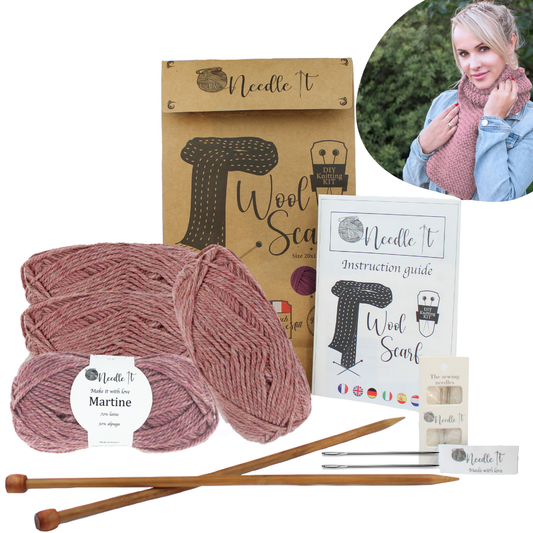
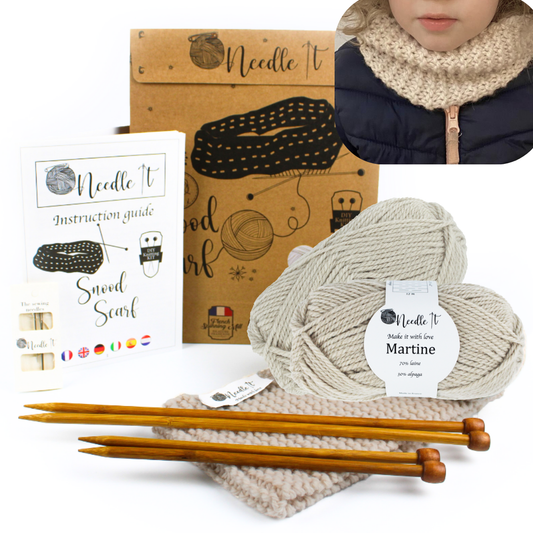
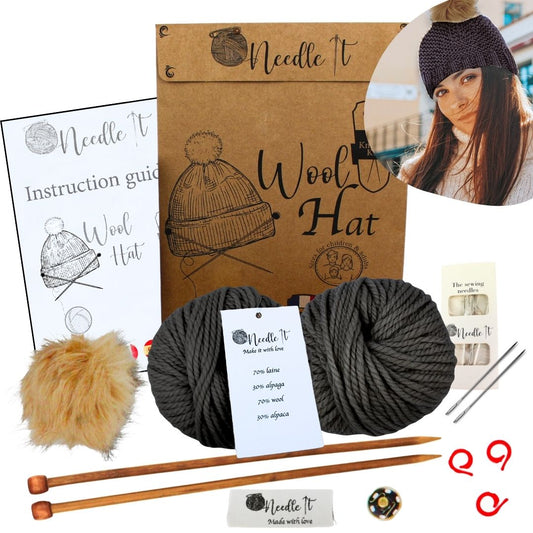
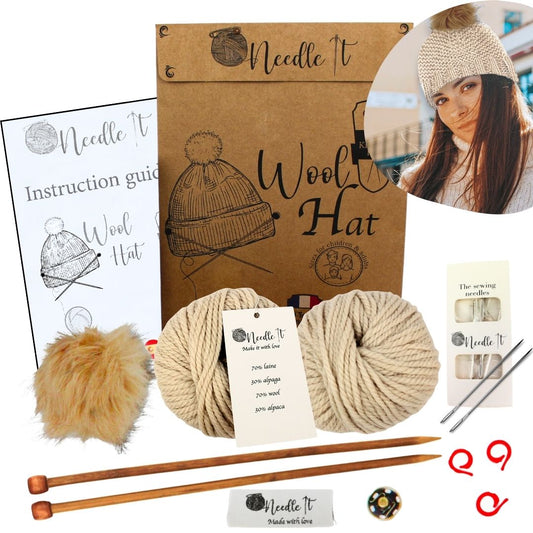
At Needle-it, we know that knitting is a creative journey filled with small learning moments. That is why we offer approachable projects designed to help you practise new techniques and build your confidence step by step. Try our scarf knitting kit or our hat knitting kit. Both are great projects for practising the basics and continuing to develop your knitting skills while enjoying something made by hand.